
What is tungsten carbide?
Tungsten carbide (WC) is a compound of tungsten and carbon — a grey powder about twice as dense as steel and close to diamond in hardness. Bonded with cobalt or nickel and sintered, it becomes cemented carbide: the hard metal behind cutting tools, mining buttons, dies and wear parts.
- Molar mass
- 195.85 g/mol
- Tungsten by weight
- 93.9%
- Crystal structure
- Hexagonal
- Appearance
- Grey-black powder
- WC
- Chemical formula
- 15.6
- Density, g/cm³
- 9–9.5
- Mohs hardness
- ~2,800 °C
- Melting point
- 65%
- Of world tungsten use

Written by Alok Kanani
Chief Executive Officer, Carbide India
Updated
01 — Definition
Tungsten carbide: a compound, a powder — and a hard metal.
WC · the compound
WC–Co · the hard metal
Tungsten carbide is a chemical compound of tungsten (W) and carbon (C) in equal numbers of atoms — formula WC. By weight it is about 94% tungsten. It is made as a fine grey powder by heating tungsten powder with carbon, and on its own it is extremely hard, very stiff and about twice as dense as steel.
Powder alone can’t be made into a tool. So in industry, “tungsten carbide” almost always means cemented carbide— also called hard metal or WC–Co: tungsten carbide grains bonded with a tougher metal binder, usually cobalt and sometimes nickel, then pressed and sintered into a solid part. The grains bring hardness and wear resistance; the binder brings the toughness to survive impact. A “tungsten carbide” insert, mining button, die or ring is cemented carbide.
The compound was first made by the French chemist Henri Moissan in 1893. Cemented carbide followed in 1920s Germany, developed for wire-drawing dies and sold by Krupp from 1926 as WIDIA — wie Diamant, “like diamond”. Today, tungsten carbide products account for about two-thirds of all the tungsten the world consumes.
02 — Properties
Key properties of tungsten carbide.
The compound's published reference values, our cemented grades' ranges where they differ — and what each property means for a part in service.
| Property | Value | What it means in service |
|---|---|---|
| Chemical formula | WC — one tungsten atom per carbon atom; 93.9% tungsten by weight | A true compound, not an alloy: the ratio is fixed by chemistry. |
| Density | 15.6 g/cm³ (pure WC) · 13.1–15.0 g/cm³ for our cemented grades | About twice the density of steel. A density reading is also a check that a part is fully sintered. |
| Hardness | Mohs 9–9.5 · about 2,600 HV (pure WC) · 82.5–91 HRA for our grades | Close to corundum and far above hardened steel. After sintering only diamond, cBN and a few ceramics will cut it. |
| Stiffness (Young's modulus) | 530–700 GPa | Roughly three times steel. Carbide parts barely deflect under load, so tools chatter less and hold size. |
| Transverse rupture strength | 2,000–3,250 N/mm² for our grades | The bending strength of the cemented part — the toughness counterpart to hardness. Rises with binder content and finer grain. |
| Melting point | About 2,800 °C (published values range from 2,780 to 2,870 °C) | Far above steel, which is why carbide keeps its hardness at cutting temperatures where steel softens. |
| Thermal expansion | 5.5 µm/m·K (pure WC) | About half that of steel. Gauges hold size as the shop warms up — but brazing carbide to steel needs care. |
| Thermal conductivity | 110 W/m·K (pure WC) | About twice carbon steel, so heat is drawn away from a cutting edge. |
| Oxidation | Begins at 500–600 °C in air | The real temperature limit for dry, hot running. Coatings push it higher. |
| Corrosion | WC resists most acids; the binder is the weak point | In wet, acidic or chloride service, nickel-bonded grades outlast cobalt-bonded ones. |
| Magnetism | Pure WC is not magnetic; cobalt-bonded grades are | Because cobalt is magnetic, coercive force is used as a quality check on grain size and binder. |
Pure WC: published reference data. Cemented-grade ranges: Carbide India's published grade chart. Values vary with grade, grain size and binder.
03 — Don't mix them up
Tungsten vs tungsten carbide vs cemented carbide.
Three materials that share a name. Tools, rings and wear parts sold as “tungsten” are almost always the third.
The element
Tungsten
- What it is
- A metallic element, atomic number 74
- Density
- 19.3 g/cm³
- Hardness
- Mohs 7.5
- Melting point
- 3,422 °C
- Typical use
- Filaments, electrodes, heavy alloys — and the raw material for carbide
The compound
Tungsten carbide
- What it is
- Tungsten and carbon, one atom each
- Density
- 15.6 g/cm³
- Hardness
- Mohs 9–9.5 · about 2,600 HV
- Melting point
- About 2,800 °C
- Typical use
- A grey powder — the hard phase in cemented carbide and coatings
The hard metal
Cemented carbide
- What it is
- WC grains bonded with cobalt or nickel, pressed and sintered
- Density
- 13.1–15.0 g/cm³ (our grades)
- Hardness
- 82.5–91 HRA (our grades)
- Melting point
- Sintered at 1,300–1,600 °C, where the binder turns liquid
- Typical use
- Tools, mining buttons, dies and wear parts — what “tungsten carbide” usually means
04 — Manufacturing
How tungsten carbide is made — in our Nashik plant.
Tungsten carbide parts are made by powder metallurgy. Many carbide part makers buy ready-mixed grade powder; we start from tungsten metal powder and run every step below in-house.
Powder metallurgy
Powder → part, in-house
ST/01
Tungsten metal powder
Tungsten oxide is reduced in hydrogen to fine tungsten metal powder. Its particle size sets the carbide grain size further down the line.
ST/02
Carburising
The tungsten powder is blended with carbon and heated until the two combine into tungsten carbide — WC.
ST/03
Milling with the binder
WC is milled with its binder — cobalt, or nickel for corrosive service — to an exact ratio: from 6% to 25% binder in our grades.
ST/04
Pressing
Grade powder is compacted on PLC-controlled hydraulic presses with a floating-die arrangement into a “green” part: full shape, chalk-soft and oversized.
ST/05
Pre-sintering and shaping
A pre-sinter in hydrogen gives the part enough strength to be turned, drilled and shaped — the last point at which carbide machines easily.
ST/06
Sintering
In the vacuum furnace the binder turns liquid and pulls the grains together. The part shrinks substantially — which is why it was shaped oversize — and reaches full density.
ST/07
Grinding and lapping
After sintering, only diamond cuts it. Faces, bores and edges are ground and lapped to final size and a micron-level finish.
ST/08
Testing and traceability
Density, hardness, transverse rupture strength, coercive force and microstructure are checked, and components carry a batch number back to their records.
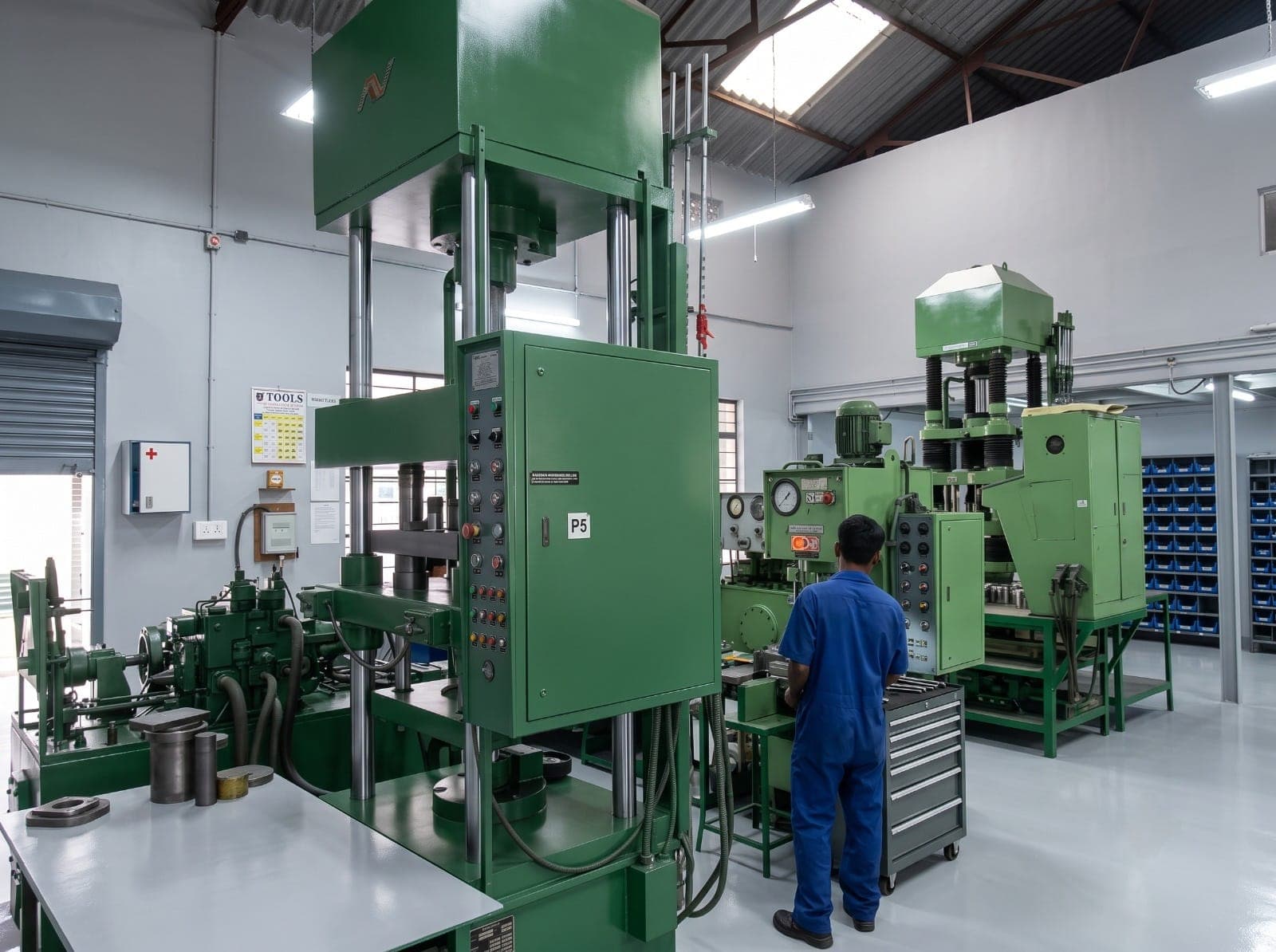
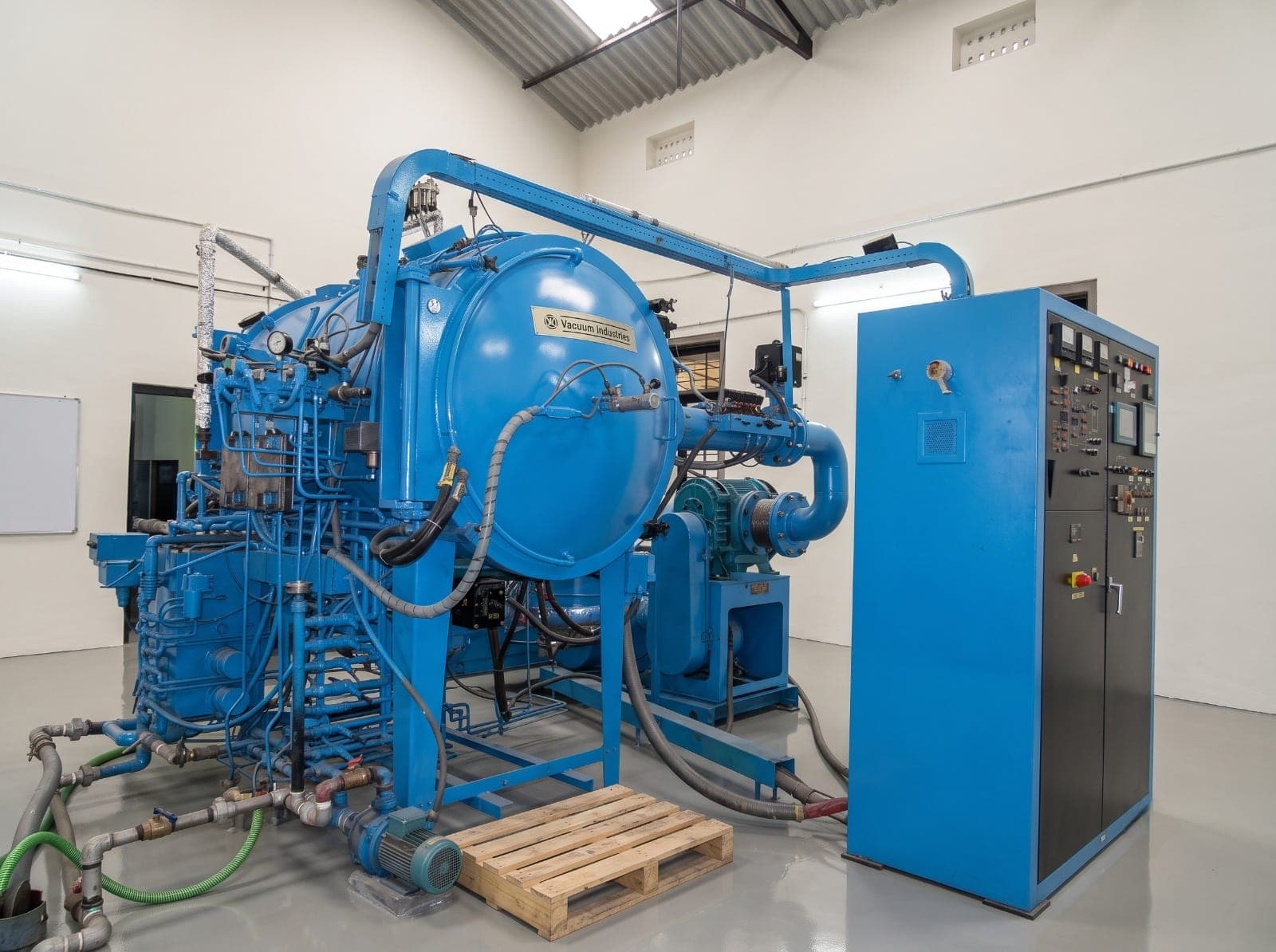
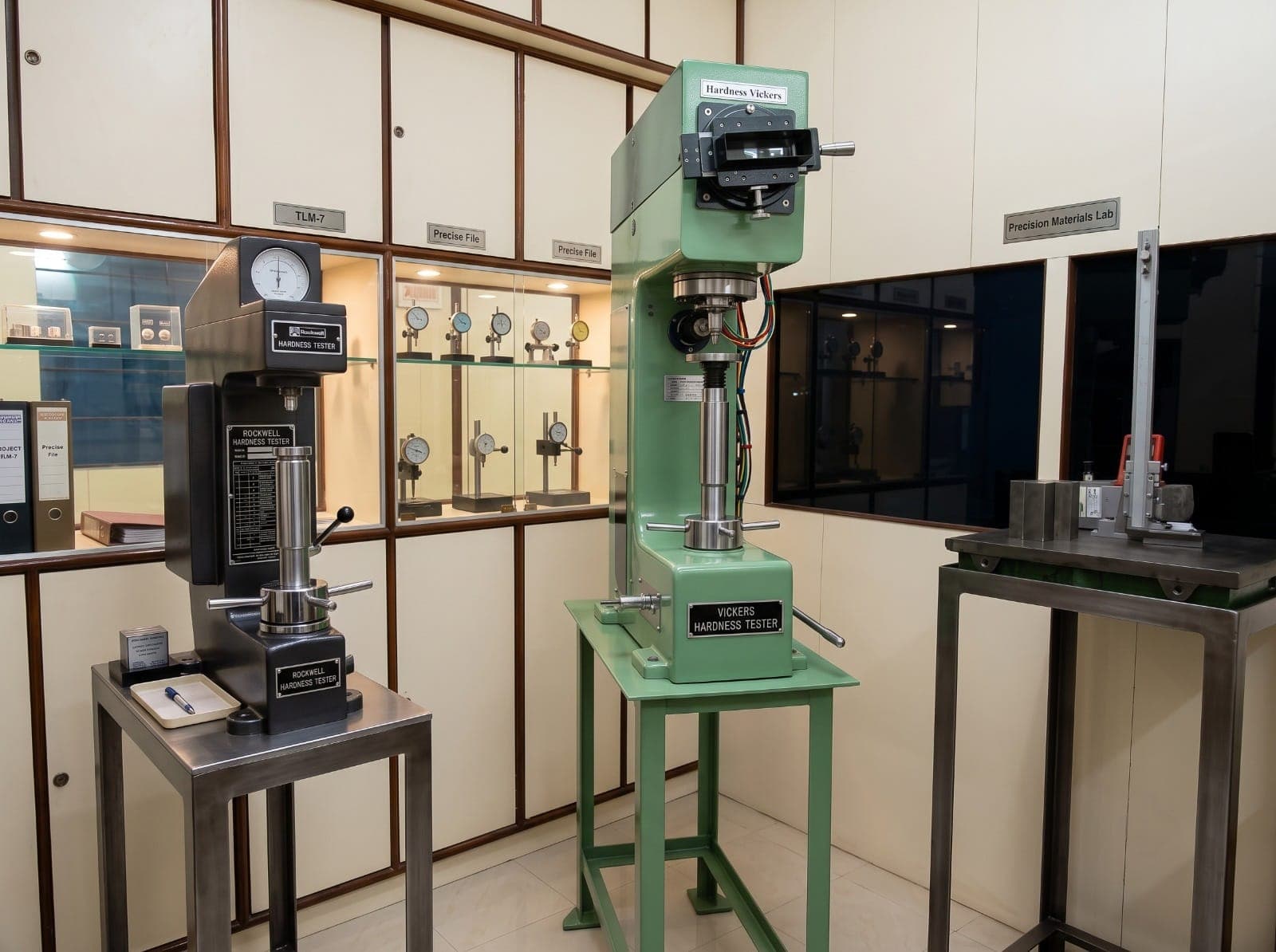
See the plant and equipment on our about page, and every test in quality & testing.
05 — Grades
There is no single “tungsten carbide” — there are grades.
Two levers set a grade. Finer grain and less binder make carbide harder and more wear-resistant; coarser grain and more binder make it tougher against impact. Every grade is a trade between the two.
Our grades run from extra-fine CIF06 — 6% cobalt, 91 HRA, for cutting and nozzles — to coarse CID25 — 25% cobalt, 82.5 HRA, for heading dies that take millions of blows.
Choose by how the part fails today: edges wearing smooth means move harder; chipping or cracking means move tougher.
Full tungsten carbide grade chart →How to choose a grade: grain size & cobalt →
06 — Applications
What tungsten carbide is used for.
Anywhere wear, impact or heat would destroy steel quickly. These are the seven product families we make from it:
Beyond industry
Scratch-resistant rings and watch parts, ballpoint pen balls, tyre and shoe studs, surgical instrument tips and armour-piercing cores.
07 — Advantages & limitations
Where tungsten carbide wins — and where it doesn't.
Carbide is not a straight upgrade on steel. Knowing its limits is how you get the life you paid for.
| Property | Strength or limit | What it means for your part |
|---|---|---|
| Wear resistance | Strength | Outlasts tool steel many times over in abrasive work — the main reason to pay for carbide. |
| Hot hardness | Strength | Stays hard at temperatures where steel tools soften, so it cuts faster and longer. |
| Stiffness | Strength | About three times steel: less deflection, less chatter, better accuracy. |
| Tunable grades | Strength | Grain size and binder content trade hardness against toughness to suit the job. |
| Brittleness | Limit | Far less forgiving than steel under shock or bending. Pick a tougher, higher-binder grade and keep the part in compression — shrink-fitted in a steel case, for example. |
| Hard to machine | Limit | Once sintered it can only be ground with diamond or cut by EDM. Order parts sintered close to size so little grinding is left. |
| Weight | Limit | Twice the density of steel — a factor in fast-moving or hand-held parts. |
| Oxidation | Limit | Oxidises in air above 500–600 °C. Coatings or coolant keep it below that. |
| Cost | Limit | Tungsten and cobalt cost more than steel. Judge it on cost per part produced, not price per tool. |
General cemented-carbide practice. For a specific part, send the drawing and duty cycle.
08 — Go deeper
Grades, prices, scrap and comparisons.
09 — Questions
Tungsten carbide questions.
Q/01What is tungsten carbide made of?
Tungsten and carbon, in equal numbers of atoms (WC) — about 94% tungsten by weight. Tungsten carbide parts are cemented carbide: WC grains held together by a metal binder, usually cobalt and sometimes nickel. Our grades contain from 6% to 25% binder.
Q/02What is so special about tungsten carbide?
It combines properties that rarely come together: hardness approaching diamond, roughly three times the stiffness of steel, hardness that holds at high temperature, and — once cemented with cobalt — enough toughness to take impact. It can also be tuned, from very hard and wear-resistant to very tough, by changing grain size and binder content.
Q/03Is tungsten carbide harder than diamond?
No. Tungsten carbide is about 9 to 9.5 on the Mohs scale; diamond is 10. Pure WC measures about 2,600 HV against roughly 10,000 HV for diamond. That gap is why carbide is ground with diamond wheels.
Q/04What is the difference between tungsten and tungsten carbide?
Tungsten (W) is a metallic element: denser (19.3 g/cm³) and softer (Mohs 7.5). Tungsten carbide (WC) is a compound of tungsten and carbon: lighter (15.6 g/cm³) and much harder (Mohs 9–9.5). Tools, rings and wear parts sold as 'tungsten' are almost always tungsten carbide.
Q/05Is tungsten carbide a metal?
Strictly, no — it is a carbide, a ceramic compound. But it behaves partly like a metal: it has a metallic lustre and conducts heat and electricity well. Cemented carbide, with its metal binder, is a ceramic–metal composite, which is why it is also called hard metal.
Q/06Is tungsten carbide magnetic?
Pure tungsten carbide is not magnetic. Cobalt-bonded carbide is mildly magnetic because cobalt is — so much so that its magnetic response (coercive force) is used as a quality check on grain size and binder. Nickel-bonded grades are much less magnetic.
Q/07Does tungsten carbide rust?
Tungsten carbide itself doesn't rust and resists most acids. In a cemented part the binder is the weak point: in wet, acidic or chloride-laden service, cobalt can leach out of the surface and loosen the grains. Nickel-bonded grades resist this better, which is why our oil and gas choke beans use a 10% nickel binder.
Q/08Can tungsten carbide be machined?
Only before it is fully sintered. Pre-sintered blanks are soft enough to turn, drill and shape. After sintering, tungsten carbide can only be ground or lapped with diamond, or cut by EDM — so parts are shaped oversize first, then sintered and ground to final size.
Q/09How much does tungsten carbide cost per kg?
Carbide powder is a traded commodity: one price tracker listed tungsten carbide at about USD 389 per kg delivered to India in April 2026. Finished parts are priced per piece, because grinding, tolerances and quantity matter more than the weight of carbide. Our tungsten carbide price guide explains what drives the price.
RFQ — 24 h engineering response
Send us your
hardest problem.
Share a drawing, a failing part, or a duty cycle. Our application engineers reply within 24 hours with DFM feedback, a grade recommendation, and a technical quote.
Trusted by Bosch · HAL · Atlas Copco · SECO · Jindal Stainless and more