
Tungsten carbide wear parts — made to your drawing.
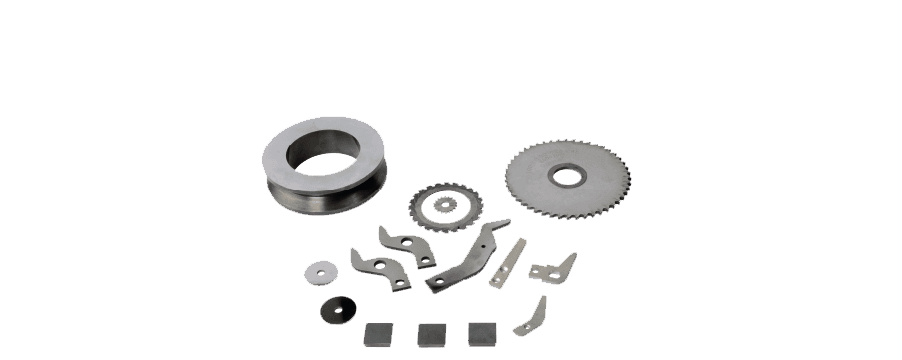
Carbide India manufactures tungsten carbide wear parts for process plants and industry — mechanical seal rings, wire guides, shot-blasting nozzles, knives, slips and plug gauges, petroleum-industry parts and custom components, in customised sizes with a super finish.
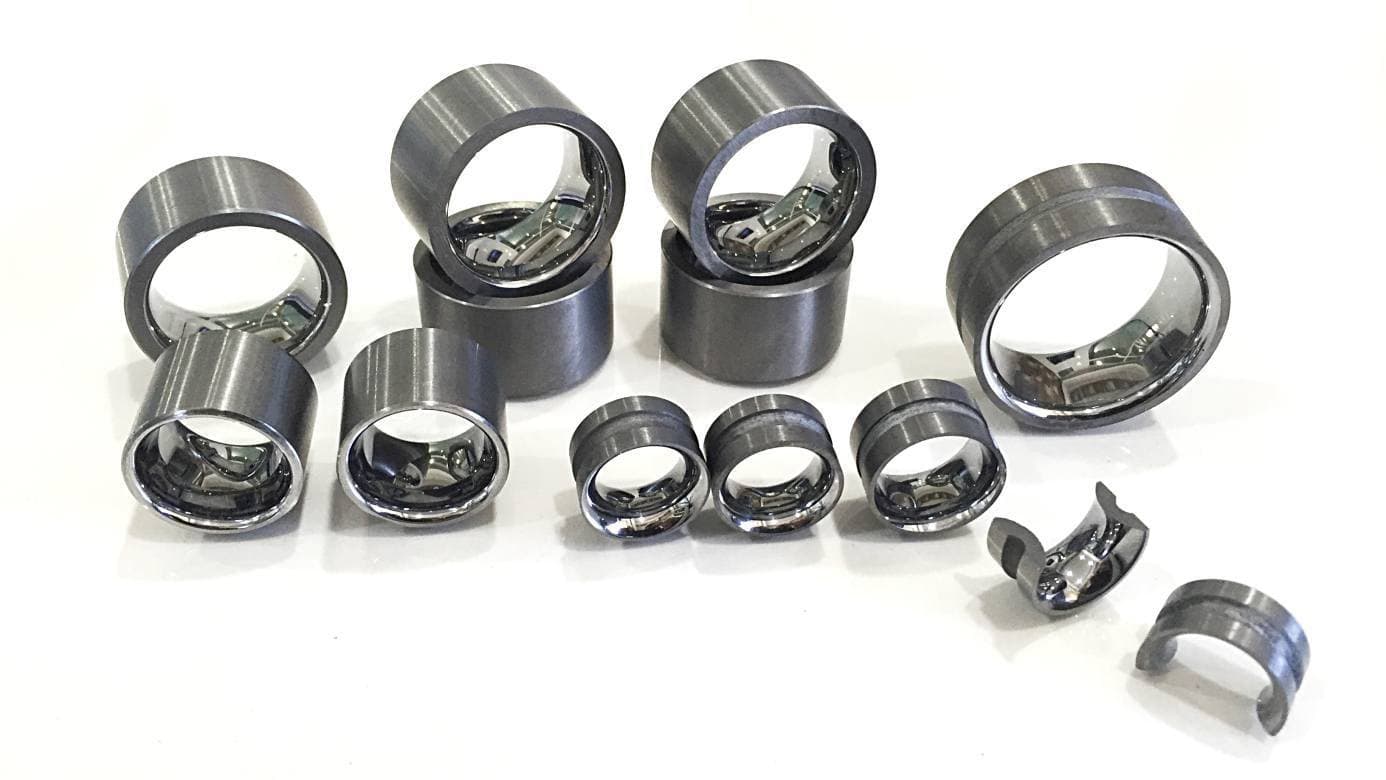
Seal rings & wire guides — lapped bores
- Custom
- Sizes to drawing
- Lapped
- Super-finish faces
- 03
- Wear grades
- 91 HRA
- Hardest — CIF06
- Express
- Deliveries
01 — Range
Wherever a shutdown costs more than the part.
Process plants, pumps, wire lines and blasting shops — the carbide components that keep them running between planned stops.
WP/01
Mechanical seal rings
Seal faces ground and lapped to a super finish, for pumps and mixers handling abrasive media.
WP/02
Wire guides, bushes & sleeves
Bores that keep wire and shafts running true long after steel would have worn oval.
WP/03
Shot-blasting nozzles
Nozzles in CIF06 — the extra-fine grade our published applications name for shot blasting.
WP/04
Industrial knives
Knives and cutting edges for materials that blunt steel.
WP/05
Slips, plug gauges & blade-industry gauges
Wear-resistant gauging surfaces that hold their size through thousands of checks.
WP/06
Petroleum-industry parts
Wear parts for oil and gas service — including our dedicated range of choke beans, stems and seats.
02 — Wear map
Name the wear, and the part and grade follow.
Wear isn't one thing. Abrasion, erosion, sliding, cutting and impact each attack a part differently — and each points to a different grade.
Pure wear → low cobalt
Wear + shock → step up
Abrasion
Hard particles or a moving workpiece scour the surface.
- Wire guides
- Slips & plug gauges
- Gauges for the blade industry
GradeCIW06 · CIF06
Erosion
Particle-laden flow strikes the surface at speed.
- Shot-blasting nozzles
- Petroleum-industry parts
- Choke beans
GradeCIF06 · WC–Ni
Sliding wear
Two faces run against each other under load.
- Mechanical seal rings
- Bushes & sleeves
GradeCIW06
Cutting & shearing
An edge does the work — and wears round.
- Industrial knives
- Slitting & textile cutters
GradeCIF06 · CIF10
Wear with impact
The part is worn and knocked at the same time.
- Custom parts that take shock
GradeCIW08 and up
Grades from our published applications; WC–Ni is the nickel-bound carbide we use for choke beans. Tell us the medium, speed and failure and we'll confirm the grade.
03 — Seal faces
Flat to within a light band or two.
A mechanical seal works only if its two faces are flatter than the fluid film between them. That flatness is measured in light.
Seal faces are lapped, then checked under monochromatic helium light with an optical flat. Interference fringes — light bands — show the shape of the face: straight, evenly spaced bands mean it's flat; bowed bands mean it isn't.
Two helium light bands — about 0.0006 mm — is a common flatness call-out; demanding seals ask for one. For media that are abrasive, tungsten carbide faces are the standard choice; for highly corrosive media, silicon carbide often is.
General seal practice — your seal maker's flatness call-out governs.
04 — Custom parts
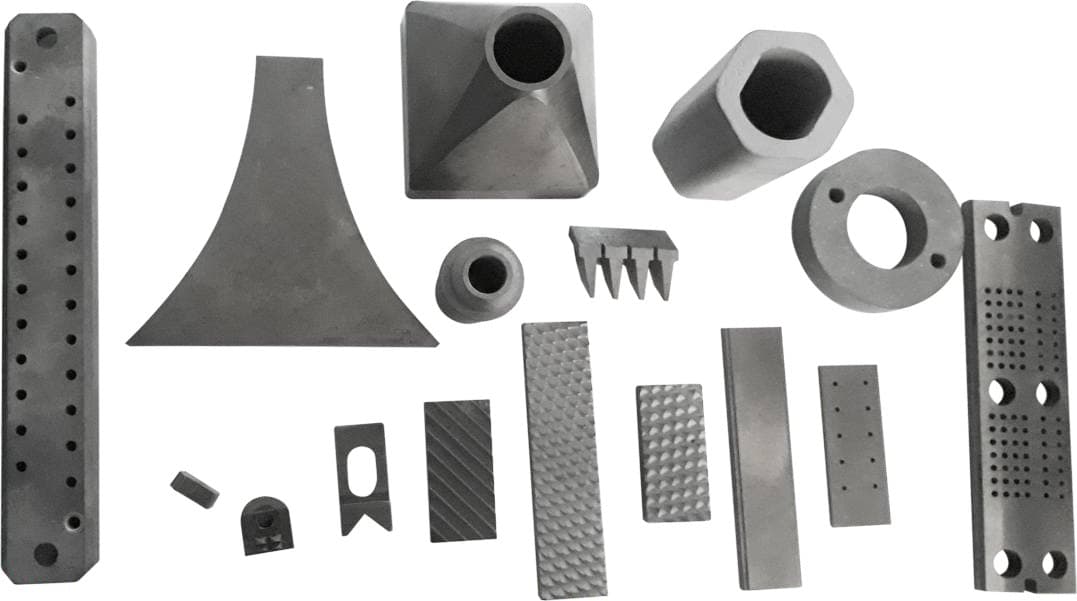
If it wears, send us the drawing.
Plates, nozzles, guides, rings and shapes that exist on nobody's catalogue page. What helps us quote it right first time:
- 01A drawing or sample — with the critical faces and tolerances marked
- 02What the part handles: medium, particle size, speed or pressure
- 03How the current part fails, and how long it lasts
- 04Quantity, and whether you need it finished or with grinding allowance
05 — Blasting nozzles
Nozzle life: what the liner buys you.
Industry estimates of liner life, in hours, by abrasive. Tungsten carbide doesn't last longest — it survives handling best. Choose for how your nozzles are treated.
| Liner | Aluminium oxide | Expendable abrasive | Steel shot / grit | Character |
|---|---|---|---|---|
| Tungsten carbide | 20–40 | 300–400 | 500–800 | The most robust: best at surviving knocks, drops and rough handling |
| Silicon carbide | 50–100 | 400–600 | 600–1,000 | Lighter and longer-wearing, but chips more easily and can crack if mishandled |
| Boron carbide | 200–1,000 | 750–1,500 | 1,500–2,500 | Longest-wearing, especially with sharp abrasives — and the most expensive; avoid rough handling |
Estimated service life in hours, from a trade-association guide (AMPP). Real life depends on abrasive hardness, size and shape, and on pressure.
06 — Questions
Asked by plant engineers.
Grades, custom parts, seal faces and oil & gas service.
Q/01Which carbide grade is best for seal rings and wear parts?
For abrasion-dominated wear, a low-cobalt grade: CIW06 (6% cobalt, rated for high wear resistance) or extra-fine CIF06. Where the part also takes shock, step up to CIW08. We'll recommend a grade from the duty and the failure mode.
Q/02Do you make custom tungsten carbide wear parts?
Yes. Customised sizes and custom components to drawing are a core part of our wear-parts work — plates, nozzles, guides, rings and special shapes.
Q/03Do you make tungsten carbide parts for the oil & gas industry?
Yes — petroleum-industry wear parts, and a dedicated range of tungsten carbide choke beans, stems and seats for OCT, Thornhill-Craver, Gray Tool and Cameron chokes.
Q/04How flat do carbide seal faces need to be?
Seal faces are lapped and checked in helium light bands with an optical flat. Two light bands — about 0.0006 mm — is a common call-out, and demanding seals ask for one. Your seal maker's drawing governs.
Q/05Which blasting nozzle material lasts longest?
By industry estimates, boron carbide liners last longest, then silicon carbide, then tungsten carbide. Tungsten carbide is the most robust of the three — the best at surviving knocks and rough handling — so the right choice depends on your abrasive and how your nozzles are treated.
Further reading
RFQ — 24 h engineering response
Send us your
hardest problem.
Share a drawing, a failing part, or a duty cycle. Our application engineers reply within 24 hours with DFM feedback, a grade recommendation, and a technical quote.
Trusted by Bosch · HAL · Atlas Copco · SECO · Jindal Stainless and more