
Carbide cutting tool inserts, tips & cutters.
Carbide India makes tungsten carbide cutting inserts for metal, plastics and sheet materials — metal-cutting tips, granulator knives, circular and slitting cutters, cutter blanks and broaches, made to drawing in our own extra-fine and general-purpose grades.
- 03
- Cutting grades
- 91 HRA
- Hardest edge — CIF06
- 3,250
- TRS N/mm² — CIF10
- To drawing
- Tips, knives, cutters
- 25 MT
- Annual capacity
01 — Range
The carbide inside your cutting tools.
Not catalogue indexable inserts — the tips, knives, cutters and blanks that are brazed, clamped or ground into your tools, made to your drawing.
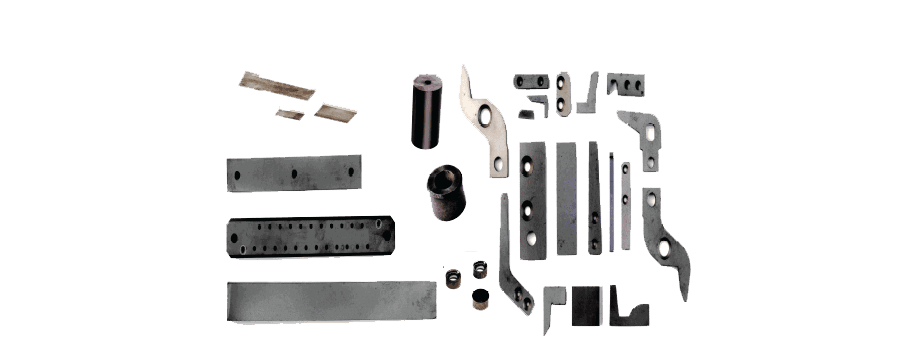
CT/01
Metal-cutting tips
Carbide tips for brazing onto turning, boring and form tools — in extra-fine CIF06 for a sharp, hard edge.
CT/02
Cast iron & general-purpose tips
Tips in CIK20 for cast iron and general machining, where a tougher edge earns its keep.
CT/03
Steel-machining broaches & broach cutters
Carbide for broaching steel — teeth that hold their size over long runs.
CT/04
Plastic granulator knives
Knives for granulating and recycling plastics, in CIF10 — a fine-grain grade that stays sharp against abrasive fillers.
CT/05
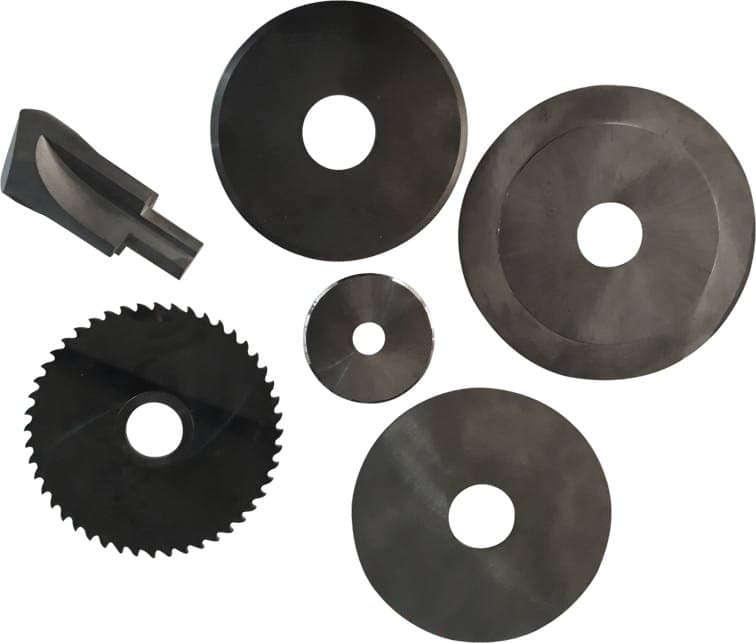
Circular, slitting & saw cutters
Finished cutters and cutter blanks for slitting, sawing and textile cutting.
CT/06
Asbestos & fibre-sheet cutting
Tools for abrasive sheet materials that wear steel edges down quickly.
02 — Grade selection
Tell us what you cut. That picks the grade.
Three cutting grades, each matched to the materials it outlasts. Find your material, read across.
Extra fine → sharpest edge
General purpose → toughest
| You cut | We make | CIF06Extra fine · 6% Co 91 HRA · TRS 3,100 | CIF10Extra fine · 10% Co 90 HRA · TRS 3,250 | CIK20— · —% Co 89.8 HRA · TRS 2,000 |
|---|---|---|---|---|
| Steel & general metal | Metal-cutting tips | Use | ||
| Steel — broaching | Steel-machining broaches, broach cutters | Use | ||
| Cast iron | C.I. & general-purpose tips | Use | ||
| Rotary burrs | Burr blanks | Use | ||
| Plastic granules | Granulator knives | Use | ||
| Textiles | Scissors & cutters | Use | ||
| Asbestos & fibre sheet | Sheet-cutting tools | Use |
Pairings from our published grade applications. Cutting something not listed — or seeing chipping rather than wear? Send the material and the failure, and we'll recommend a grade.
03 — Grades
Three grades, fully published.
Density, hardness and transverse rupture strength for every cutting grade we make.
| Grade | WC grain | Cobalt % | Hardness (HRA) | Density (g/cm³) | TRS min (N/mm²) | Typical application |
|---|---|---|---|---|---|---|
| CIF06 | Extra fine | 6 | 91 | 14.88–15.00 | 3,100 | Metal cutting, drawing plugs, shot-blasting nozzles, asbestos sheet cutting |
| CIF10 | Extra fine | 10 | 90 | 14.45–14.55 | 3,250 | Plastic granule cutting, textile scissors and cutters |
| CIK20 | — | — | 89.8 | 14.75 | 2,000 | Burr blanks, broach cutters, cast iron and general-purpose machining |
04 — Granulator knives
A sharper case for carbide on the granulator.
Plastic recyclers grind through glass-filled and contaminated material that blunts steel knives fast. What changes when the edge is carbide.
GK/01
Edge life
Hardened tool steel is the usual knife; wear-resistant carbide on the edge is the upgrade for abrasive streams. Patent literature reports carbide-coated knives lasting around three times longer than chrome-vanadium steel ones.
GK/02
Resharpening
A knife is typically resharpened several times before it's too small to use — about five, by one industry estimate. A carbide edge stretches the interval between those grinds.
GK/03
Clearance
Every resharpening changes the knife and needs the rotor-to-bed-knife clearance reset. Fewer grinds mean fewer resets — and less downtime on the line.
General industry guidance — follow your granulator maker's clearance settings. Our grade for granulator knives is CIF10.
05 — Brazing guide
Five rules for brazing a carbide tip.
Most cracked tips are made in the brazing, not the cut. The rules that keep carbide whole on a steel body.
| Rule | Why | How |
|---|---|---|
| Size the braze to the tip | Bigger tips build more residual stress as the joint cools | Under ~10 mm, a standard silver braze alloy is usually fine; 10–20 mm calls for a carbide-specific alloy; above ~20 mm use a trimetal (copper-cored) shim. |
| Let a copper core take the strain | Carbide expands only about a third to a half as much as steel | A trimetal shim — braze alloy either side of a copper core — thickens the joint and absorbs the mismatch, so the stress doesn't crack the carbide. Don't overheat: the core must not melt. |
| Seat the tip in a pocket | Carbide is strong in compression, weak in tension | A machined pocket supports the tip and keeps it under compressive load as the joint cools. |
| Clean, flux, then heat evenly | Braze alloys need clean, fluxed surfaces to wet carbide | Degrease both parts, flux them, and heat the steel body so the tip comes up to temperature with it. |
| Cool slowly — never quench | Rapid contraction cracks carbide | Let the assembly cool in still air, sand or under an insulating blanket. Grind afterwards with a diamond wheel and coolant to avoid heat checks. |
General brazing practice compiled from braze-alloy makers' guidance. Follow your alloy supplier's data sheet for temperatures and flux.
06 — Questions
Asked by toolmakers and buyers.
Grades, indexable inserts, blanks, brazing and resharpening.
Q/01Do you make indexable carbide inserts such as CNMG or WNMG?
Our cutting range is tips, knives, cutters, cutter blanks and broaches made to drawing in our own grades, rather than catalogue ISO indexable turning inserts. If you need a carbide tip, blank or special cutting edge, send us the drawing and the material you're cutting.
Q/02Which carbide grade is best for plastic granulator knives?
CIF10 — an extra-fine grade with 10% cobalt and 90 HRA — is our grade for plastic granule cutting and for textile scissors and cutters.
Q/03Which grade do you use for metal-cutting tips?
CIF06, an extra-fine 6% cobalt grade at 91 HRA, for metal cutting. For cast iron, broach cutters, burr blanks and general-purpose machining we use CIK20.
Q/04Can you supply carbide cutter blanks for finishing in-house?
Yes. We supply circular, slitting and saw cutter blanks as well as finished cutters — send the dimensions and the finish you need.
Q/05How should carbide tips be brazed to a steel body?
Clean and flux both parts, heat the steel body evenly, and cool slowly — never quench. Seat the tip in a pocket so it stays in compression. Small tips braze well with standard silver alloys; for tips over about 20 mm, a trimetal shim with a copper core absorbs the expansion mismatch between carbide and steel and prevents cracking.
Q/06How many times can a granulator knife be resharpened?
Typically several times — about five, by one industry estimate — and the rotor-to-bed-knife clearance must be reset after each grind. A wear-resistant carbide edge stretches the interval between resharpenings.
Further reading
RFQ — 24 h engineering response
Send us your
hardest problem.
Share a drawing, a failing part, or a duty cycle. Our application engineers reply within 24 hours with DFM feedback, a grade recommendation, and a technical quote.
Trusted by Bosch · HAL · Atlas Copco · SECO · Jindal Stainless and more